Research
Connecting UT students with real research on solar-powered water and energy systems.
Field Deployments
Kenya 2023 Field Deployment
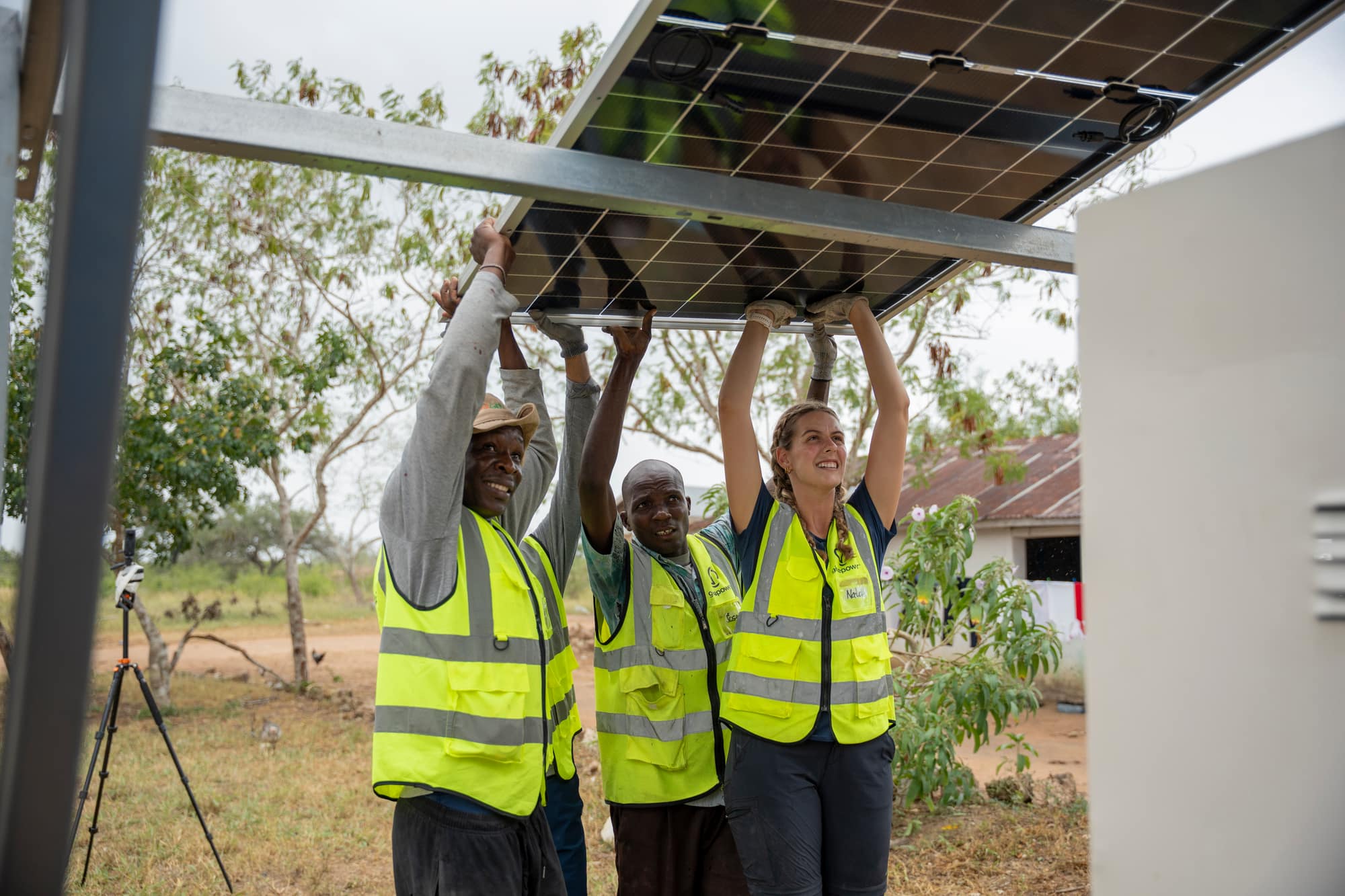
Installed a solar-powered computer lab at a rural school and conducted field research on decentralized water systems. A collaboration between Dr. Kumar’s Environmental Engineering Lab and GivePower, bridging university-level desalination research with real-world deployment.
9 undergraduates + 1 graduate student
Colombia 2024 Solar Deployment
UT GivePower members traveled to Colombia to install solar microgrids and deploy water purification systems in underserved communities. The team worked alongside GivePower engineers on off-grid solar infrastructure.
UT Austin student deployment team
Nepal 2025 Infrastructure Trek
Students deployed solar-powered infrastructure and community water access systems in rural Nepal. The trip combined hands-on installation work with field research on high-altitude solar performance and water filtration.
UT Austin student deployment team
Kenya 2026 Trek
Our next deployment — currently fundraising for a Spring 2026 trek to Kenya. The team will install solar systems and conduct field research in partnership with GivePower and Dr. Kumar’s lab.
Solar Water Farm Technology
GivePower’s Solar Water Farms use solar-powered desalination to turn saltwater and brackish water into clean drinking water. The system models — Max, Mobi+, and Mobi — range from community-scale plants producing 70,000+ liters per day to portable units for emergency response. Each farm is designed for off-grid operation, powered entirely by solar panels and battery storage.
Membrane Science & Desalination
Dr. Manish Kumar’s research lab in the Cockrell School of Engineering develops next-generation biomimetic membranes inspired by natural water-channel proteins (aquaporins). These membranes promise higher water flux with lower energy consumption — directly improving the efficiency of desalination systems like those deployed by GivePower.
Solar Microgrids for Schools
GivePower installs solar microgrids on schools in off-grid communities. Each system includes solar panels, lithium-ion battery banks, charge controllers, and inverters — providing reliable electricity for lighting, computers, and connectivity where none existed before.
The Global Water & Energy Crisis
685 million people worldwide still lack access to electricity, and 1.4 billion live in water-vulnerable regions. The intersection of energy poverty and water scarcity is where GivePower operates — using solar to solve both simultaneously.
Education Transforms Societies
South Korea went from one of the poorest nations in 1950 to a global technology leader in a single generation — driven largely by massive investment in education and electrification. GivePower’s model follows the same thesis: power schools, unlock education, transform communities.